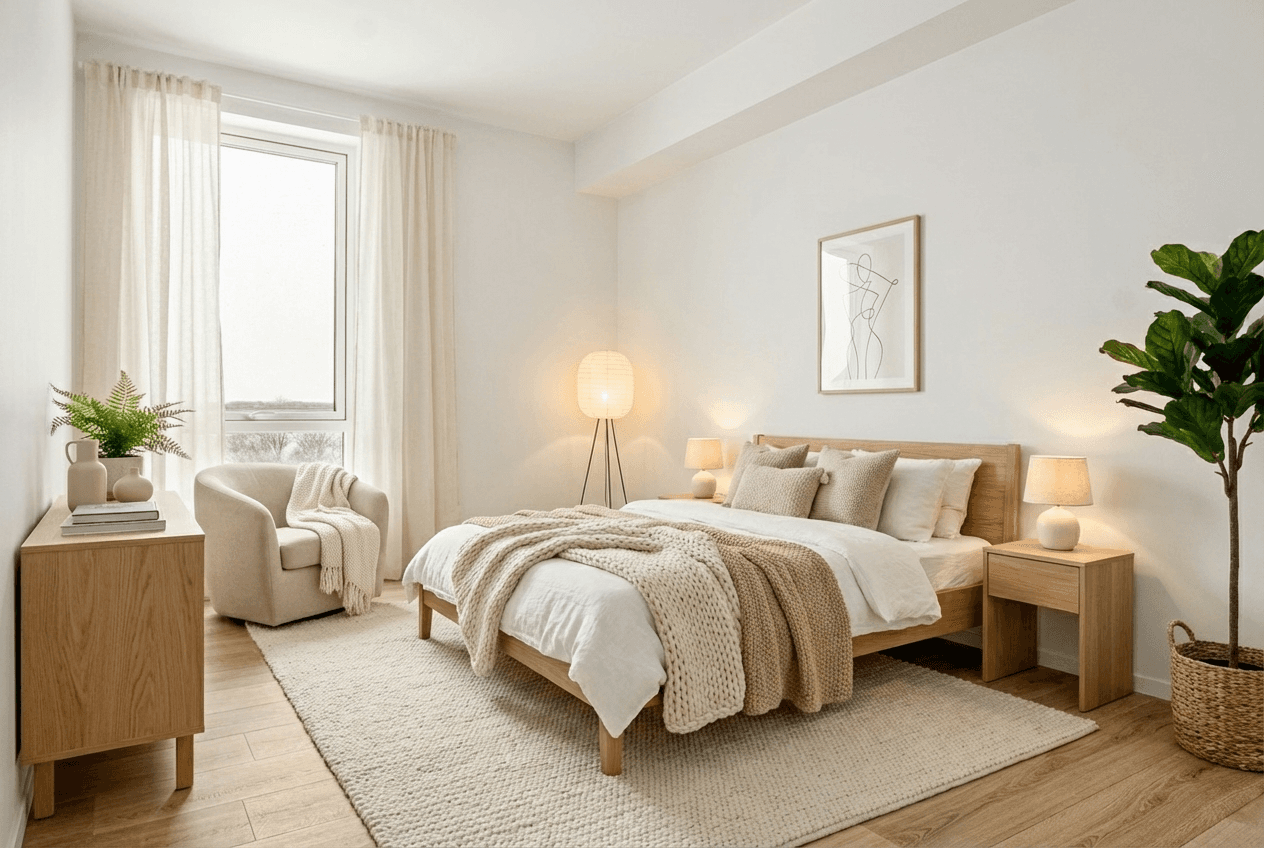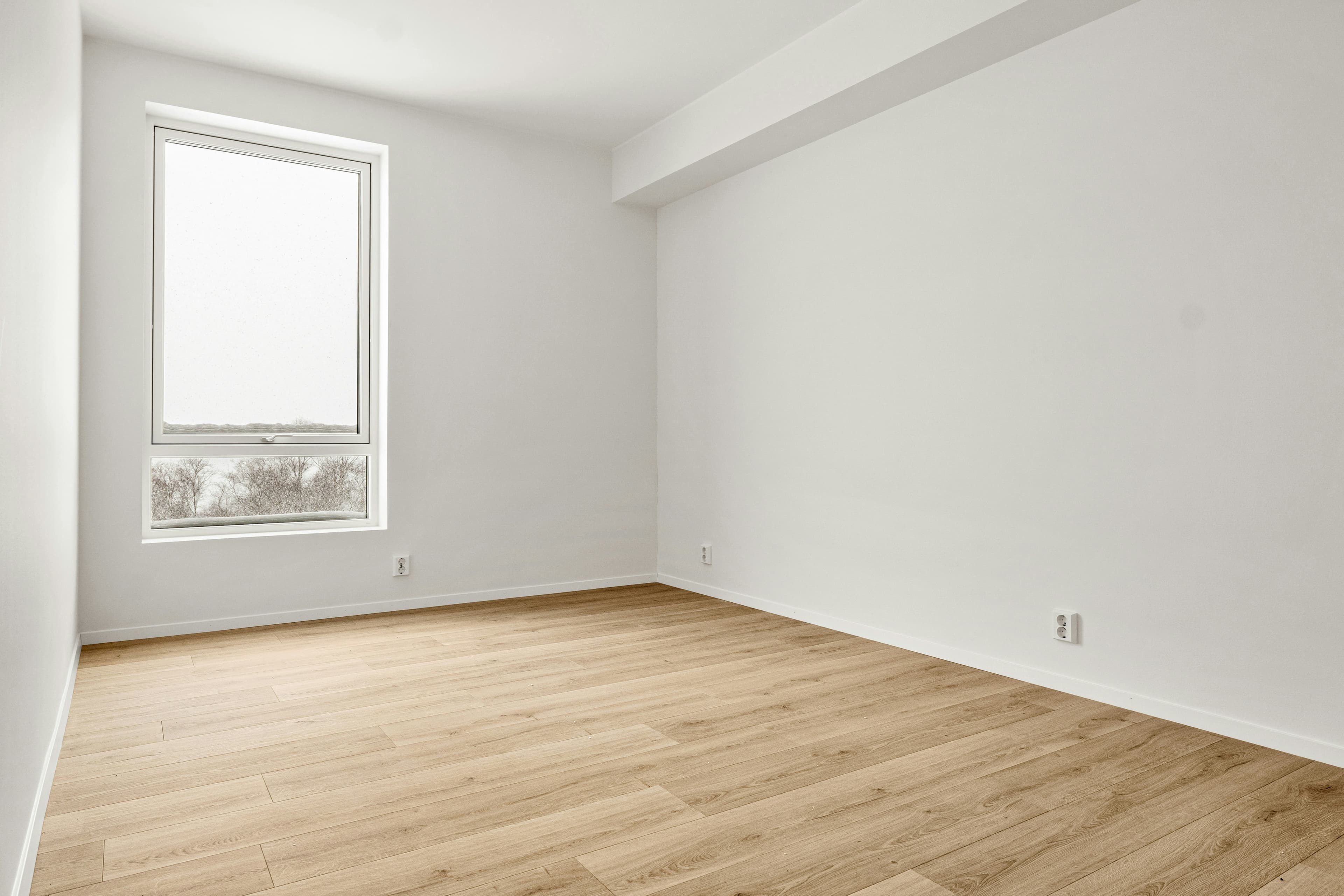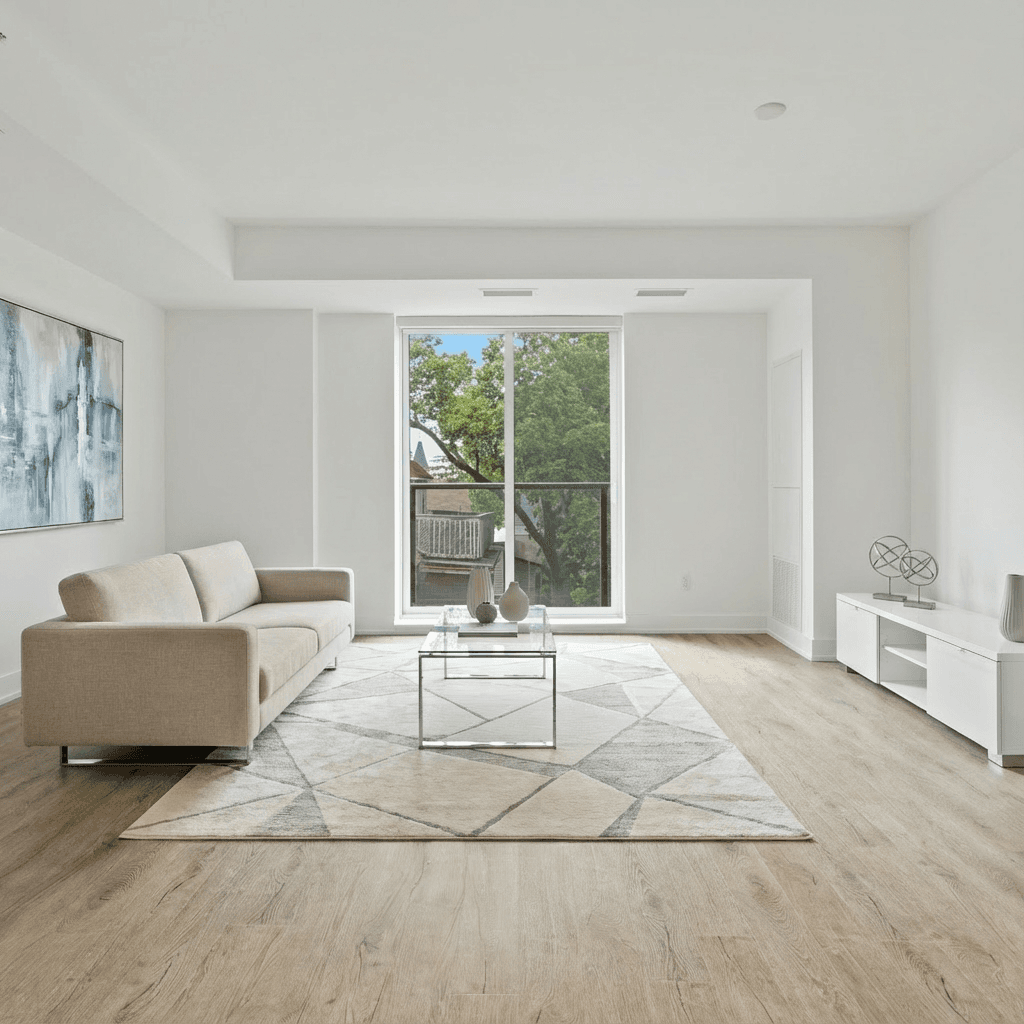
The right staging style should make a property easier to understand, not make every listing look like the same trend board. Start with the home's architecture, light, materials, and layout. Then select a restrained visual direction that supports what is already there.
Do not choose style by stereotyping buyers
It is tempting to assign a style to an assumed demographic. That is both weak marketing and a poor basis for real-estate communication. Instead, ask what the property itself communicates: clean modern lines, natural wood, historic character, an urban loft feel, coastal light, or a quiet suburban setting. Use style to clarify the room, not to make assumptions about who should live there.
Read four cues in the original photo
- Architecture: note ceiling height, window shape, built-ins, mouldings, floor plan, and era-defining details.
- Light: identify whether the room is bright, shaded, warm, cool, or dependent on artificial lighting.
- Materials: use existing floors, cabinetry, stone, brick, and metal as anchors for the furniture palette.
- Function: decide what a buyer needs to see the room do—gather, dine, sleep, work, or transition outdoors.
Useful style directions
| Direction | Useful when the property has | Keep in mind |
|---|---|---|
| Modern | Clean lines, newer finishes, or a simple open plan | Use restraint so the room does not become stark. |
| Scandinavian | Natural light, pale wood, or a compact layout | Useful for showing calm function without crowding the floor plan. |
| Mid-century | Period character, warm woods, or strong geometric detail | Let original architectural features lead. |
| Industrial or urban | Loft details, brick, metal, or city context | Preserve light and avoid over-darkening the room. |
| Coastal | Light, water-adjacent, or airy material cues | Use it as a palette, not as a collection of themed décor. |
| Farmhouse or country | Traditional proportions, texture, or rural context | Keep furnishings proportional and contemporary enough for the room. |
Keep the listing visually coherent
Choose one primary direction for the anchor rooms, then vary only where a room has a genuinely different purpose. Consistent materials, colour temperature, and furniture scale help a buyer understand the listing as one home. A different style in every room can make the gallery feel generated rather than considered.
Review before publishing
- Does the furniture work with the actual room dimensions and circulation?
- Does the style support the original materials rather than erase them?
- Are light direction, window views, and permanent features unchanged?
- Does the same visual direction appear across the rooms that form the listing story?
- Is the altered image clearly disclosed where local rules require it?
Explore before you commit
It is reasonable to test two restrained directions for a key room before choosing a campaign style. Propscene supports eight controlled staging directions—Modern, Scandinavian, Mid-Century, Industrial, Farmhouse, Coastal, Urban, and Country—so a team can explore without relying on open-ended prompts. Start with the staging styles library, then use an approved result in the listing photo-to-reel workflow.