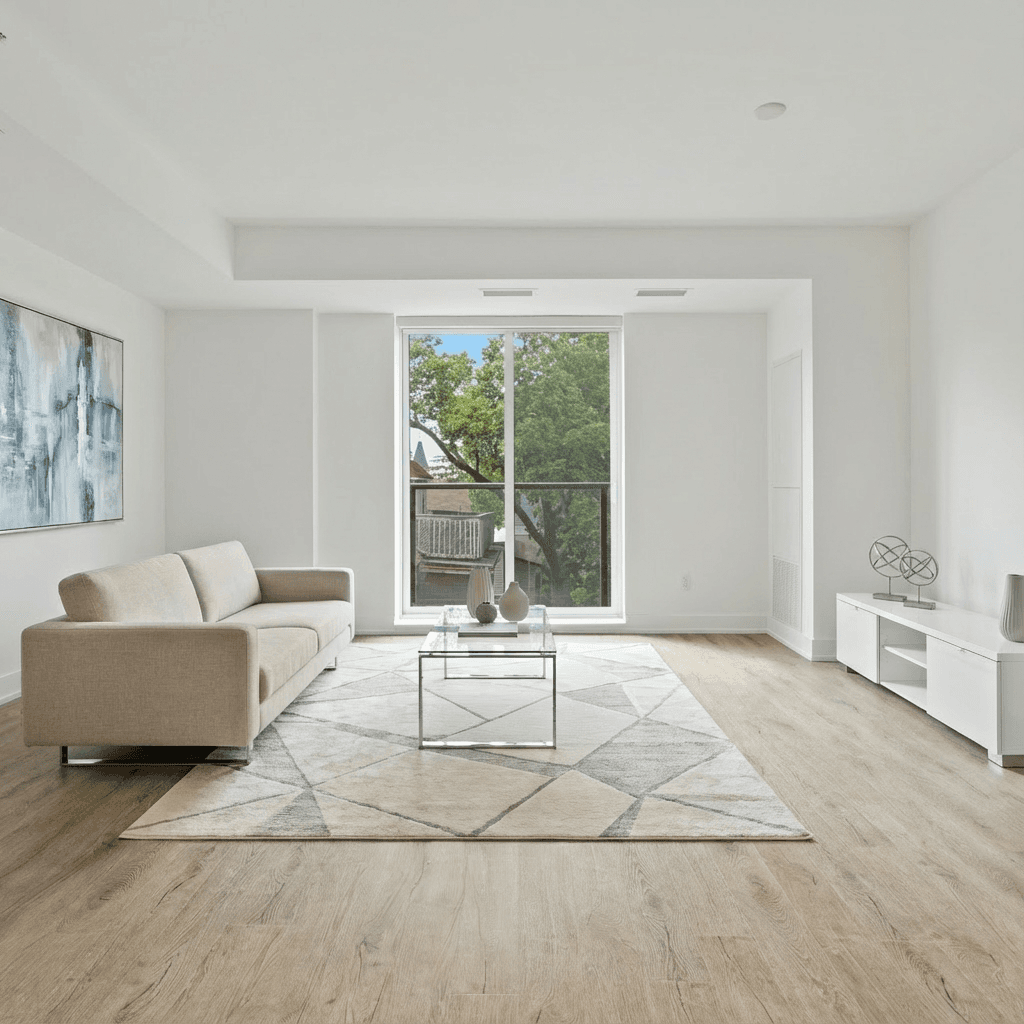
Virtual staging is worth it when it helps a prospective buyer make a better decision from an honest photo. It is not worth it when the property already reads clearly, when the edit would create a misleading impression, or when the marketing plan does not use the image beyond a single upload.
Use this five-question test
- Is there an imagination gap? Empty or awkward rooms can make it hard to judge scale and use. A staged visual should answer that question.
- Can the original image be strong on its own? Start with a clean, well-composed original. Virtual staging cannot rescue a poor angle, a concealed defect, or a confusing floor plan.
- Will the same image work in more than one asset? The best use is often a listing gallery, vertical reel, carousel, seller presentation, and email—not a one-off edit.
- Can the visual remain fully truthful? If you would need to alter a permanent feature, hide a problem, or imply included furniture, stop and choose a different approach.
- Can you disclose it correctly? Keep the original, label the altered image as required, and check local rules before publishing.
Where virtual staging tends to help
- A vacant living room with no obvious seating or focal-point layout.
- A second bedroom that could credibly function as an office or guest room.
- A dining space whose scale is hard to read in an empty photo.
- A set of approved listing photos that needs an engaging, motion-led social asset.
- A seller presentation where options need to be discussed before a full campaign begins.
Where it may not help
- The original room is already physically staged and photographed well.
- The key decision is about condition, structural work, or a feature that must be seen as-is.
- The listing will be shown immediately and an altered image could create a mismatch.
- The team cannot provide the required disclosure and original asset in the channel where it will appear.
The value comes from reuse
Do not evaluate a staged image only as a single listing photo. Once the visual has passed review, it can help make a content sequence more coherent: a before-and-after explanation, a photo reel, a carousel about furniture scale, a seller update, or an open-house invitation. The work becomes more valuable when it is part of an approved campaign with a consistent story.
Use one listing, twelve marketing assets to plan those uses before generation begins.
Review quality before publishing
- Does the furniture match the room's visible dimensions and perspective?
- Are doorways, windows, lighting, appliances, and permanent details unchanged?
- Does the visual clarify a real use of the room instead of merely making it look expensive?
- Is the style consistent with the property and the rest of the image set?
- Are the original and disclosure ready for the intended channel?
The bottom line
Virtual staging is a good investment in clarity, not a shortcut to a guaranteed sales outcome. Use it when it helps buyers understand the real home and gives your team an asset that can be used honestly across the campaign. Explore AI virtual staging when you have a photo set ready for that kind of review, then read how to create a transparent virtual staging video before turning it into motion content.