Why Style Matters in Virtual Staging
The right staging style doesn't just make a room look better—it helps buyers see themselves living there. When you match the design aesthetic to your target demographic, listings move faster and often sell for more.
Virtual staging gives you something traditional staging can't: the ability to show the same property in multiple styles, instantly. A downtown condo can appeal to young professionals with Modern staging and empty-nesters with Scandinavian—all from the same photo.
Propscene offers 8 curated interior design styles, each optimized for real estate photography. The AI preserves your room's architecture, windows, flooring, and natural lighting while adding photorealistic furniture and decor that matches the aesthetic perfectly.
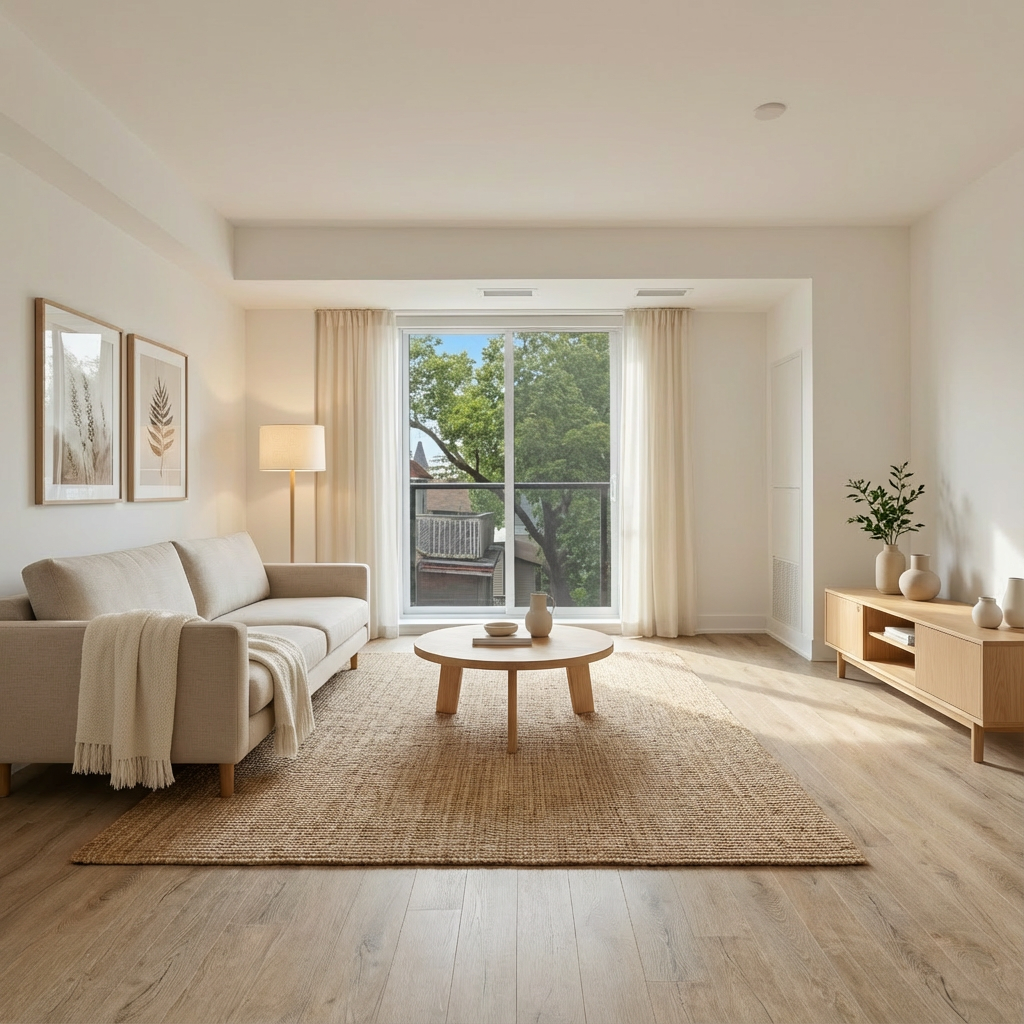
Scandinavian
The universal crowd-pleaser. Scandinavian staging works across almost every property type because it feels aspirational without being intimidating.
This style emphasizes light, space, and calm—exactly what buyers subconsciously want when they imagine their future home. The neutral palette (soft creams, warm whites, pale woods) photographs beautifully and makes rooms feel larger than they are.
Why it sells: Scandinavian design has dominated Pinterest and Instagram for years. Your buyers have been saving these images. When they see a listing staged this way, it feels familiar and desirable—like something they've already decided they want.
- Light oak or pale wood furniture
- Soft wool or jute rugs, sheer curtains
- Minimalist art, ceramic vases, potted plants
- Color mood: Soft cream
Modern
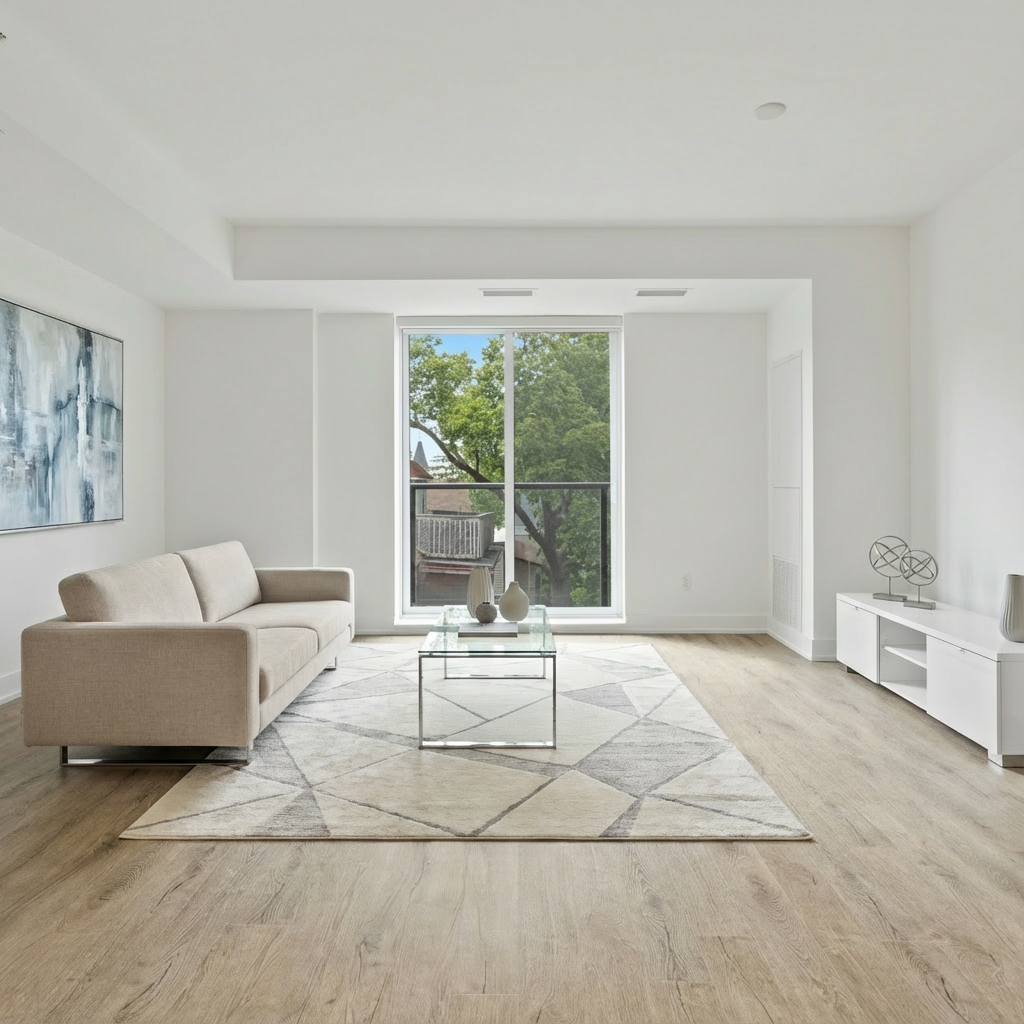
The luxury signal. Modern staging positions a property at a higher price point and attracts buyers who value sophistication over coziness.
Clean lines, minimal ornamentation, and high-quality materials create a sense of refinement. This style works particularly well for newer construction, recently renovated properties, and homes with architectural features worth highlighting.
Why it sells: Modern staging signals "move-in ready" and "no work needed." Buyers see a finished product, not a project. For investors and busy professionals, this removes mental friction from the purchase decision.
- Low-profile sofas, glass or metal tables
- Abstract artwork, sculptural objects
- Geometric rugs, metallic accents
- Color mood: White and neutral
Farmhouse
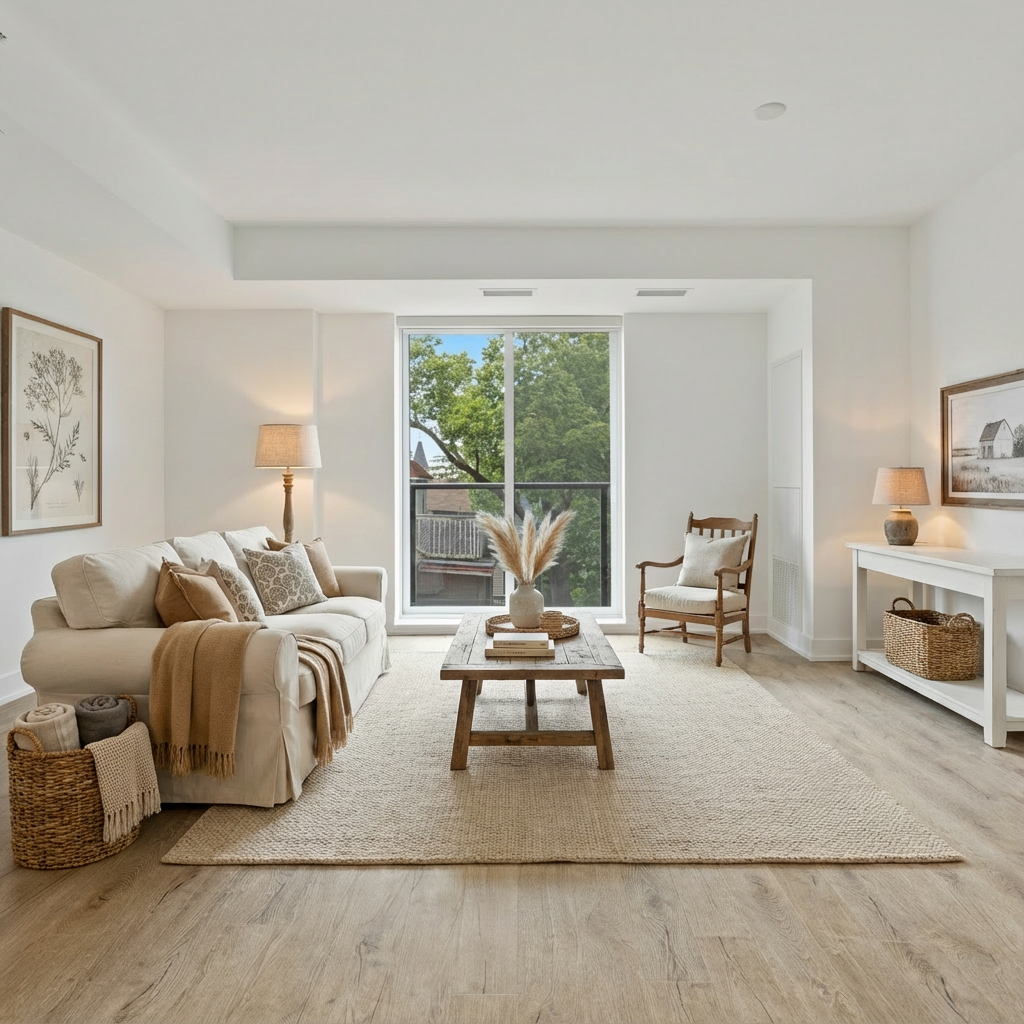
The family magnet. Farmhouse staging speaks directly to buyers looking for a home to raise a family—comfortable, warm, and lived-in.
This style combines rustic charm with modern comfort. Slipcovered sofas, natural wood, and soft textiles create spaces that feel welcoming rather than precious. It's the visual equivalent of "come in, put your feet up."
Why it sells: Farmhouse is the most popular design style in America for a reason—it appeals to the largest buyer demographic. For suburban and rural properties, this style helps buyers instantly picture Sunday dinners and holiday gatherings.
- Slipcovered sofas, rustic wood tables
- Woven baskets, soft patterned cushions
- Pampas grass, pottery accents
- Color mood: Soft cream
Coastal
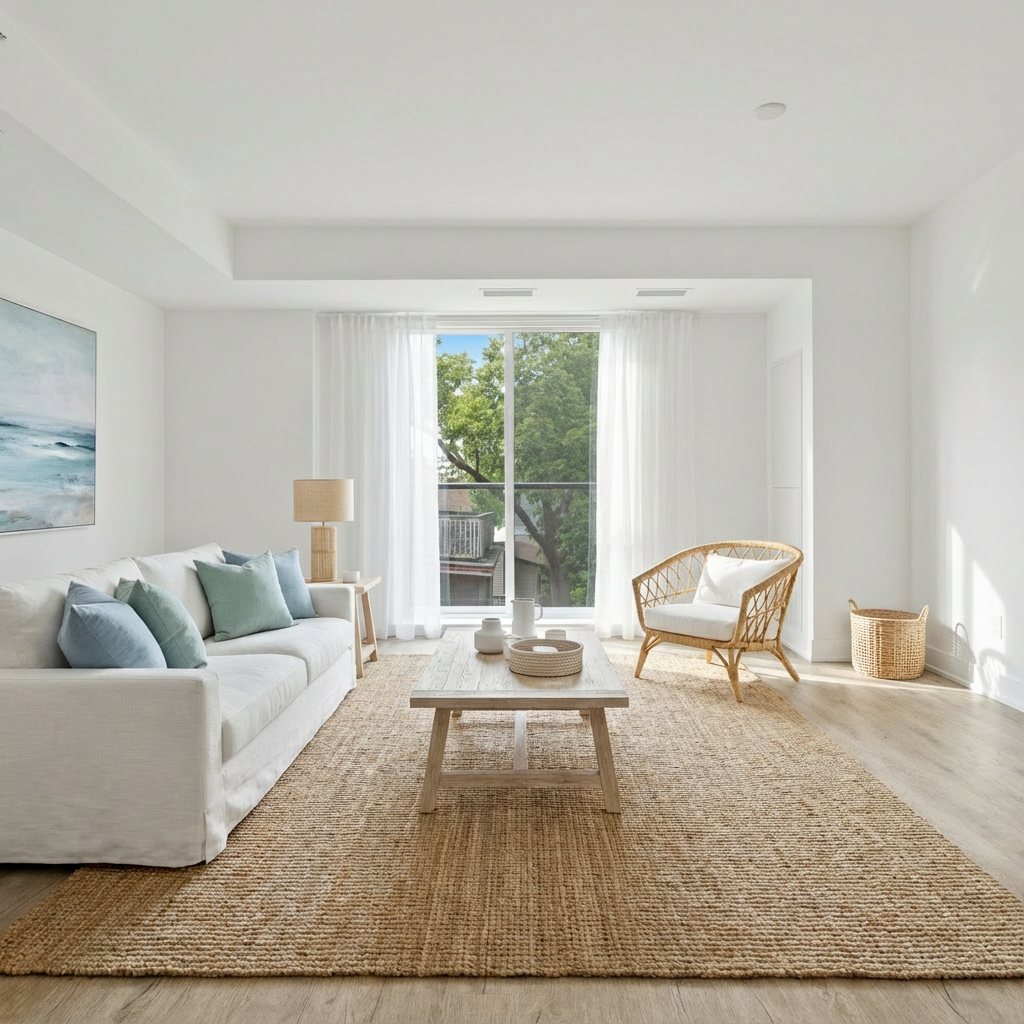
The vacation mindset. Coastal staging taps into the universal dream of relaxed, beach-adjacent living—even for properties nowhere near water.
Light woods, white linens, and ocean-inspired accents create an atmosphere of permanent vacation. This style makes rooms feel bright, airy, and effortlessly relaxed. It photographs exceptionally well because of the high contrast between white furniture and any wall color.
Why it sells: Coastal staging triggers an emotional response—buyers feel relaxed just looking at the photos. For vacation rentals and second homes, it helps buyers imagine the lifestyle they're purchasing, not just the property.
- White or beige linen seating, light wood
- Rattan or wicker accents, jute rugs
- Ocean-inspired art, blue and seafoam accents
- Color mood: White and neutral
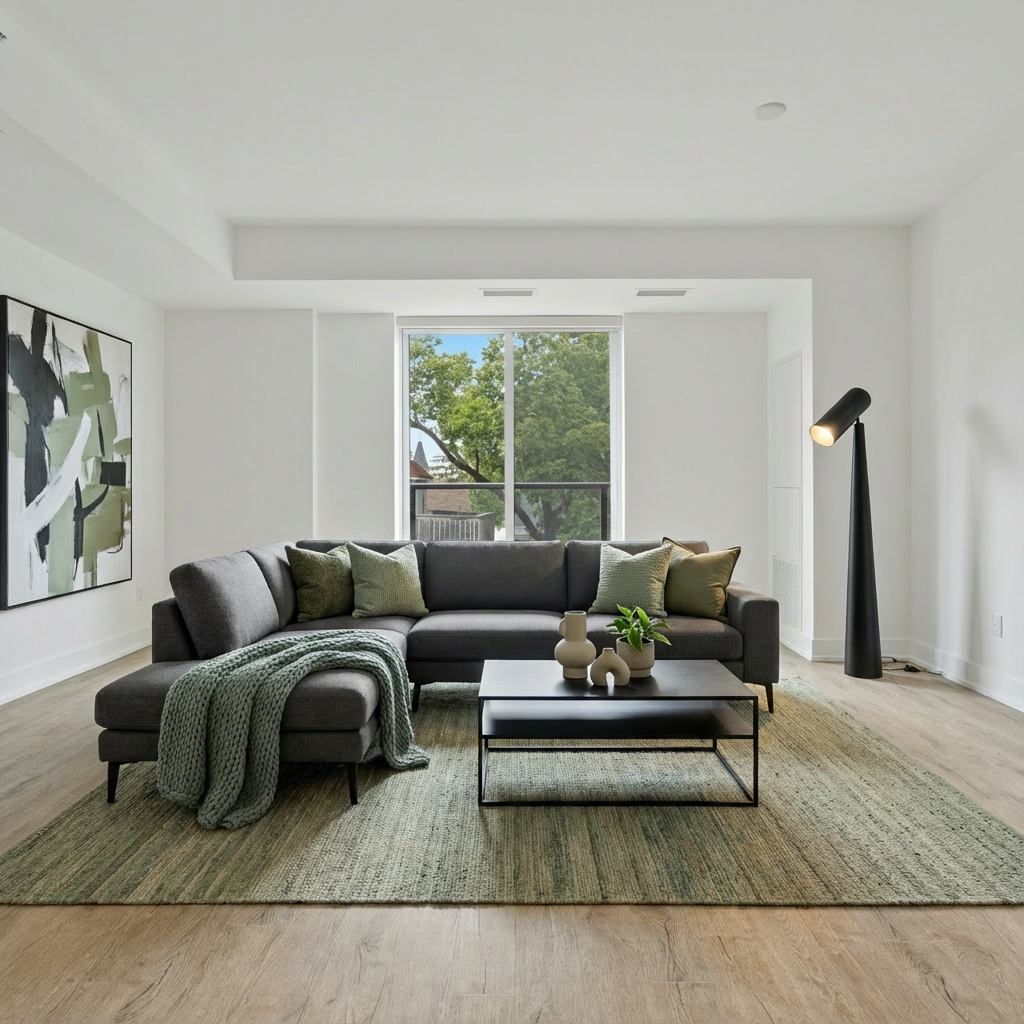
Urban
The city dweller's dream. Urban staging appeals to buyers who want their home to feel as sophisticated and curated as their favorite restaurant or hotel.
Deeper neutrals, statement artwork, and bold textures create spaces with personality and edge. This style works best when the property has interesting architectural features—exposed brick, large windows, or high ceilings—that can anchor the design.
Why it sells: Urban staging attracts a specific buyer: someone who values design, pays attention to details, and is willing to pay a premium for the right aesthetic. These buyers often make faster decisions because they know exactly what they want.
- Contemporary sectionals in deep neutrals
- Large-scale artwork, sculptural lamps
- Tall indoor plants, textured textiles
- Color mood: Soft blush
Country
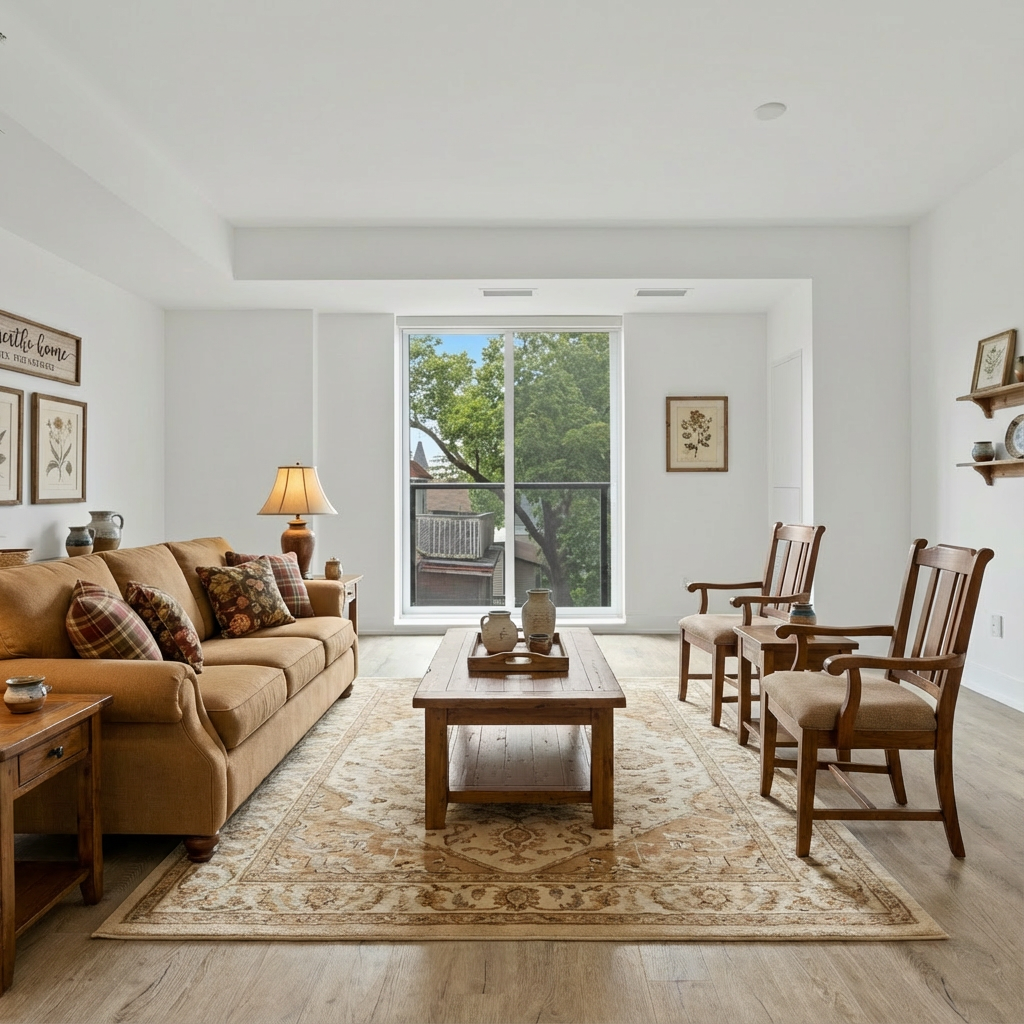
The traditional anchor. Country staging appeals to buyers who value craftsmanship, warmth, and timeless design over trends.
Solid wood furniture, warm finishes, and classic patterns create spaces that feel established and permanent. This style suggests quality and longevity—homes where furniture is inherited, not replaced.
Why it sells: Country staging resonates with buyers seeking stability and tradition. It's particularly effective for properties with history—older homes, cottages, and estates where modern staging would feel out of place.
- Solid wood furniture with warm finishes
- Plaid or floral textiles, warm rugs
- Rustic wall art, handmade ceramics
- Color mood: Warm beige
Mid-Century
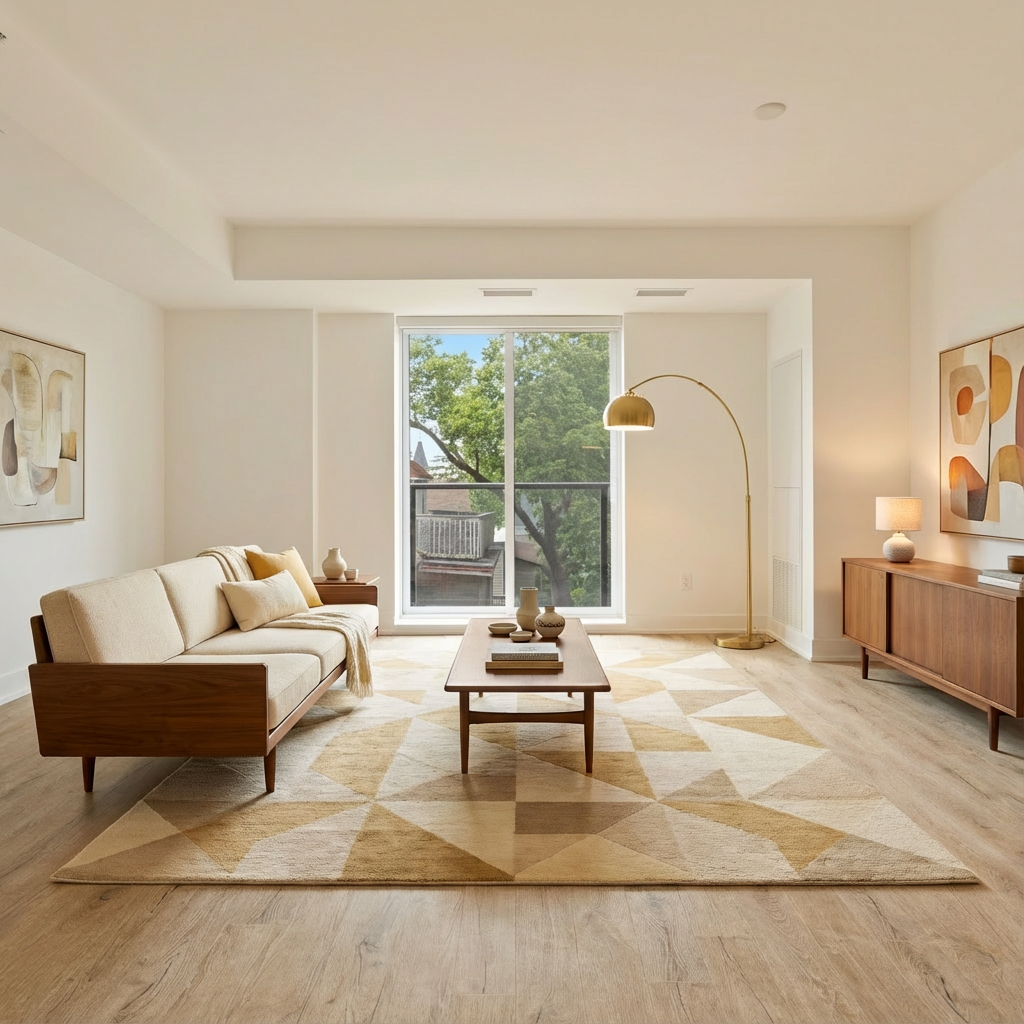
The design enthusiast's choice. Mid-Century staging attracts buyers who appreciate iconic design and are willing to pay for character.
Walnut and teak furniture, tapered legs, and organic shapes from the 1950s-60s create spaces with instant personality. This style has experienced a major revival and remains popular with design-savvy buyers of all ages.
Why it sells: Mid-Century staging signals that a property has soul. It works exceptionally well for homes built in this era, but also adds character to newer properties that might otherwise feel generic.
- Walnut or teak furniture with tapered legs
- Sunburst mirrors, vintage ceramics
- Geometric rugs, arc floor lamps
- Color mood: Warm beige
Industrial
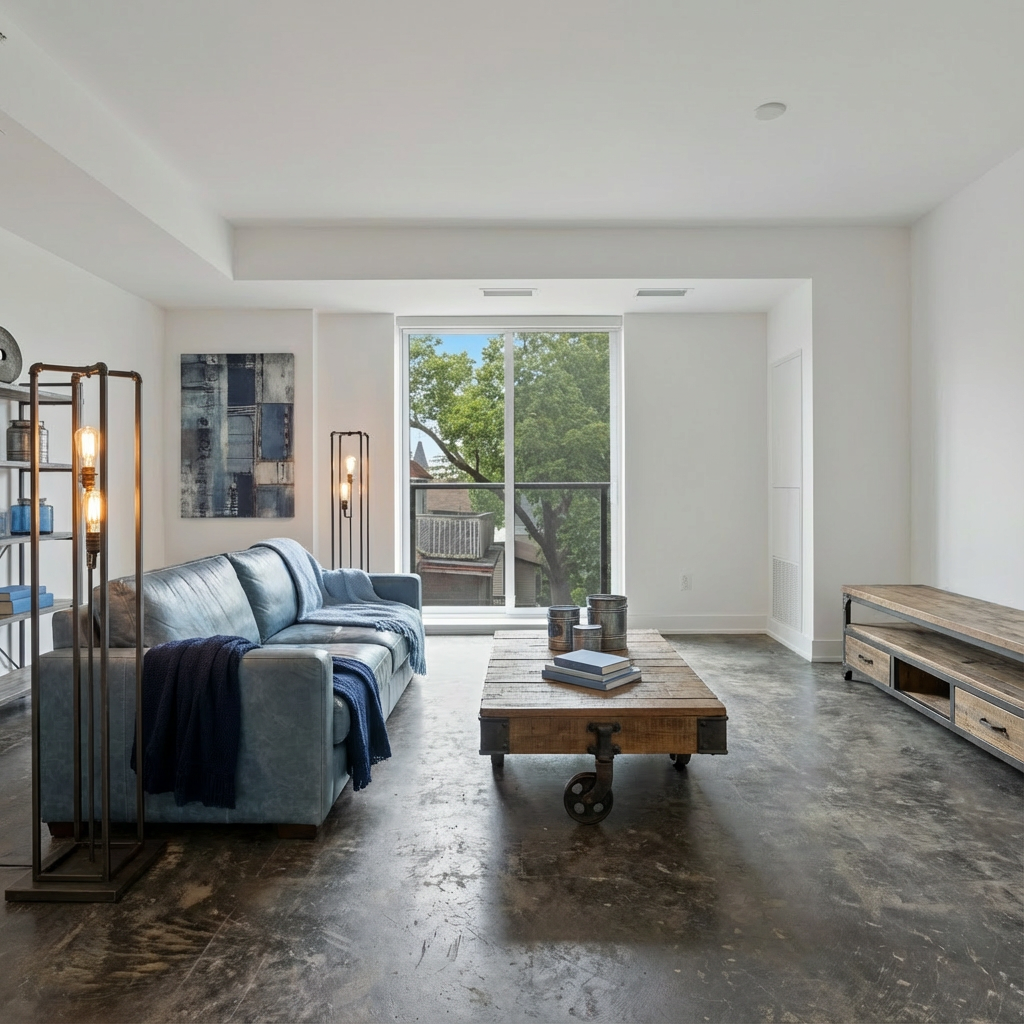
The raw edge. Industrial staging transforms urban spaces by embracing their bones rather than hiding them.
Distressed leather, metal frames, and reclaimed wood create an authentic, lived-in aesthetic. This style celebrates imperfection and works best when the property has raw elements—exposed brick, concrete floors, visible ductwork—that would fight against softer styles.
Why it sells: Industrial staging is honest. It doesn't try to make a loft look like a suburban home. This authenticity resonates with buyers who specifically want urban character—they'll pay more for a space that embraces its industrial heritage.
- Distressed leather, metal-framed furniture
- Reclaimed wood surfaces, metal shelving
- Edison-style fixtures, rugged textures
- Color mood: Dusty blue
Clean Up: Start Fresh
Before you can stage, sometimes you need to un-stage. Clean Up removes existing furniture so you can show the room's true potential.
Many listings have furniture that hurts more than helps—dated pieces, cluttered arrangements, or personal items that make it hard for buyers to imagine their own belongings in the space. Clean Up solves this by removing everything movable while preserving the room's architecture.
The workflow: Upload a photo of a furnished room, apply Clean Up to get an empty version, then stage that empty room in any style you choose. This two-step process lets you transform any property, regardless of its current state.
- Removes all furniture, decor, and movable objects
- Preserves architecture, windows, flooring, and fixtures
- Creates a clean slate for any staging style
- Works with cluttered, dated, or partially furnished rooms

Choosing the Right Style
The best staging style isn't always about the property—it's about who you're trying to attract.
Start with your buyer persona. Are you targeting young professionals? Scandinavian and Modern photograph well for social media and appeal to digitally-native buyers. Marketing to families? Farmhouse and Country create emotional connections around gathering and togetherness.
Consider the property's architecture too. A 1960s ranch will shine with Mid-Century staging that honors its era. A downtown loft demands Industrial or Urban styling that embraces its raw character. Fighting against a property's inherent style usually produces awkward results.
- Identify your target buyer demographic
- Consider the property's architectural era and style
- Match the staging to the neighborhood and price point
- When in doubt, Scandinavian is the safest universal choice
- Generate 2-3 style variations for important listings
- Use Clean Up first if existing furniture doesn't match your vision